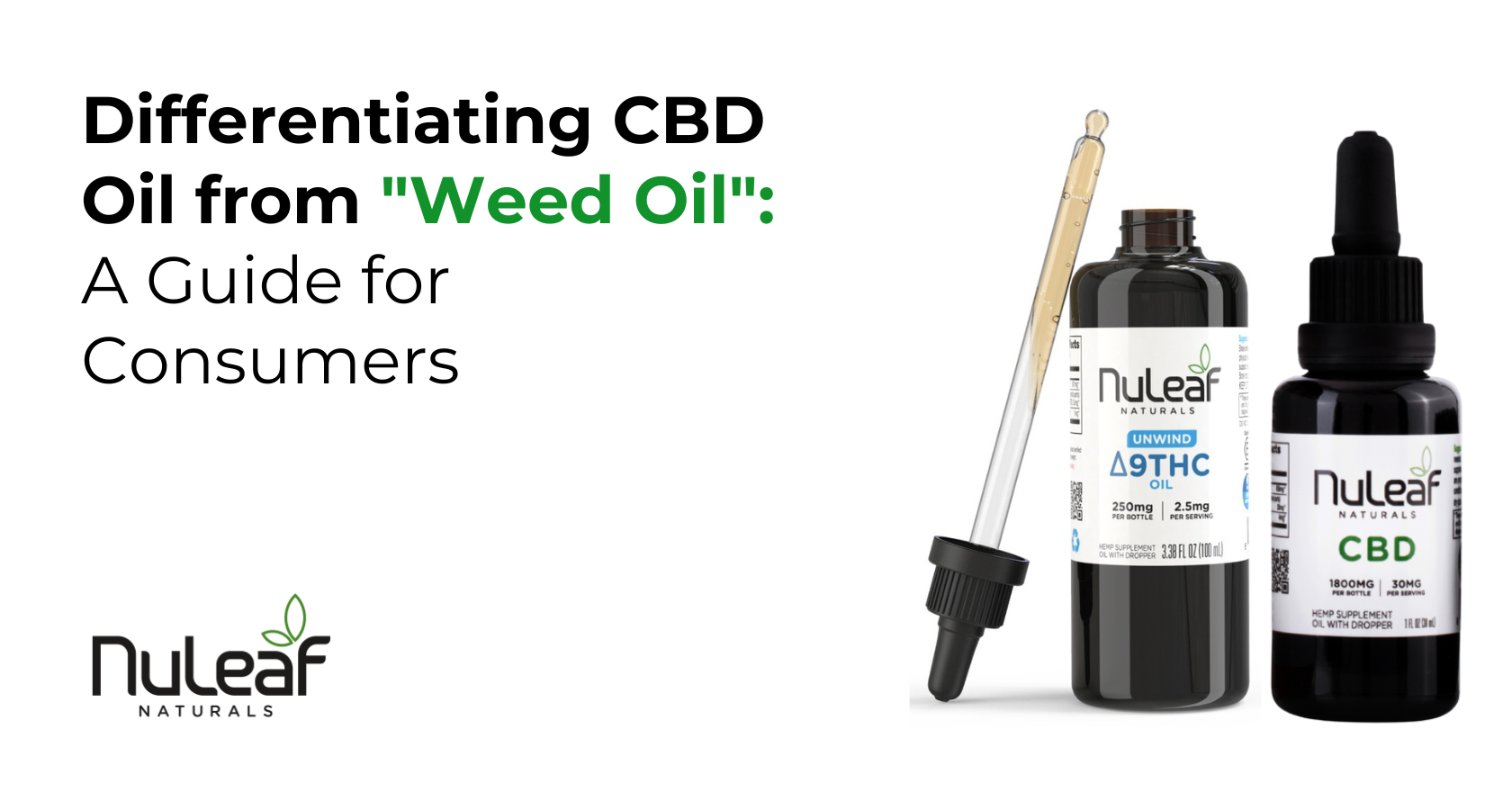
Differentiating CBD Oil from “Weed Oil”: A Guide for Consumers
Key Takeaways
- Distinct Sources: Legal CBD oil originates from hemp, a Cannabis sativa plant with minimal Delta-9 THC, while “weed oil” is derived from marijuana, a Cannabis sativa plant containing high Delta-9 THC.
- Legal Threshold: Federally legal hemp-derived CBD products, including all offerings from NuLeaf Naturals, adhere to a strict limit of 0.3% Delta-9 THC or less by dry weight.
- Non-Intoxicating vs. Intoxicating: Legal CBD oil is non-intoxicating, meaning it does not produce a “high.” In contrast, marijuana oil is intoxicating due to its higher THC content.
- Intended Use: Hemp-derived oils are primarily used for general wellness support. “Weed oil,” however, is typically used for recreational or state-legal medical purposes.
- NuLeaf Naturals’ Commitment: NuLeaf Naturals is dedicated to providing only legal, lab-verified, full-spectrum hemp extracts designed exclusively for compliant wellness applications.
While terms like “weed oil” and legal CBD oil are often confused, they represent fundamentally distinct products. Their differences lie in the source plant, chemical composition, and legal standing.
This guide clarifies these distinctions, empowering consumers to make informed decisions about their wellness choices and understand the precise nature of federally legal hemp products versus marijuana.
Clarifying the Terminology: Hemp vs. Marijuana
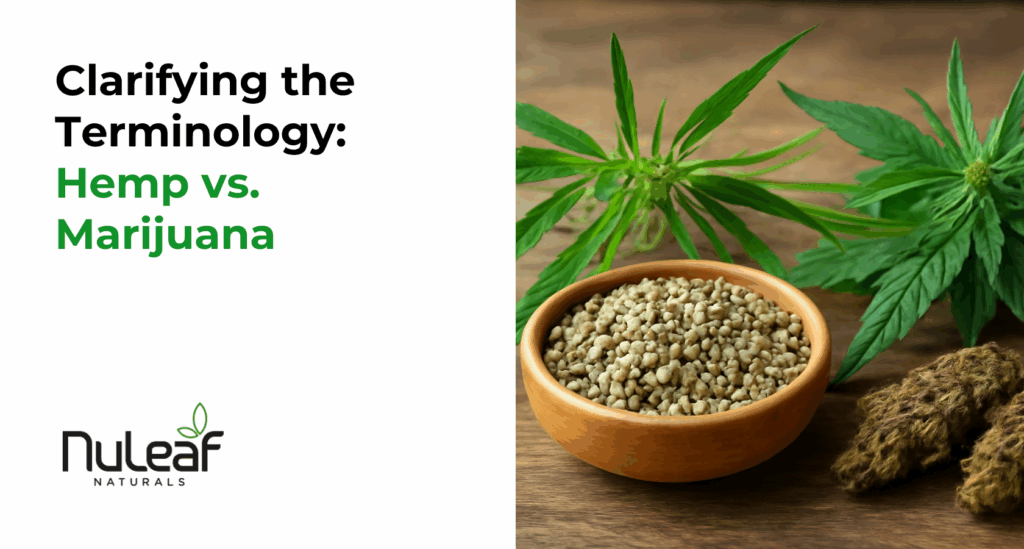
The widespread confusion surrounding cannabis-derived products stems largely from a misunderstanding of their botanical origins. Both hemp and marijuana are varieties of the Cannabis sativa plant species.
However, their unique chemical profiles and cultivation objectives result in vastly different legal classifications and effects. It is improvement to differentiate these two varieties to fully grasp the nature of the oils produced from each.
What is Hemp?
Hemp is a specific Cannabis sativa cultivar primarily grown for industrial and agricultural applications. Its defining characteristic, from both a legal and chemical perspective, is its extremely low concentration of Delta-9 tetrahydrocannabinol (THC), the main intoxicating compound in cannabis.
The 2018 Farm Bill federally legalized hemp in the United States. This pivotal legislation precisely defines hemp as any part of the Cannabis sativa plant, including its seeds and all derivatives, extracts, cannabinoids, isomers, acids, salts, and salts of isomers, with a Delta-9 THC concentration of no more than 0.3% on a dry weight basis. This specific 0.3% THC threshold is the critical legal differentiator.
Due to this low THC content, hemp, when consumed, does not produce the psychoactive effects commonly associated with marijuana. Historically, hemp has been utilized for centuries to produce textiles, paper, building materials, and food. More recently, it has gained prominence in the wellness industry for cannabinoid extraction.
Hemp cultivation is now regulated by state agricultural departments, which must submit plans to the U.S. Department of Agriculture (USDA) for approval, affirming its legal status. The cultivation of hemp focuses on maximizing potentially beneficial cannabinoids like cannabidiol (CBD) and other non-intoxicating compounds, while strictly adhering to the mandated THC limits.
What is Marijuana?
In stark contrast to hemp, “marijuana” refers to Cannabis sativa varieties that contain a Delta-9 THC concentration exceeding 0.3% on a dry weight basis. This significantly higher THC content is responsible for marijuana’s well-known intoxicating or psychoactive properties, often described as a “high.”
Despite increasing state-level legalization for medical or recreational use, marijuana remains classified as a Schedule I federally controlled substance in the United States under the Controlled Substances Act.
This federal prohibition means that, unlike hemp, marijuana and its derivatives are not legal across all U.S. states or territories. The cultivation, possession, and distribution of marijuana are subject to stringent federal regulations, even in states where local laws permit it.
Marijuana is typically cultivated to maximize its THC content, alongside other cannabinoids and terpenes that contribute to its diverse effects. It is important for consumers to recognize that products derived from marijuana, often informally called “weed oil,” contain intoxicating levels of THC and are distinct from federally legal hemp-derived CBD oils.
Consequently, the legal status of marijuana oil varies significantly by jurisdiction, contrasting sharply with the uniform federal legality of hemp oil containing 0.3% THC or less.
Comparing the Oils: A Factual Breakdown
Beyond understanding the source plants, applying this knowledge to their derived oils is important. The terminology surrounding cannabis products can be confusing, but a clear, factual comparison highlights the critical distinctions consumers need to know regarding their source, chemical makeup, and legal implications.
The primary differences between federally legal hemp oil and marijuana-derived oil are:
| Feature | Legal Hemp Oil (e.g., NuLeaf Naturals) | Marijuana Oil (“Weed Oil”) |
|---|---|---|
| Source Plant | Legal Hemp | Marijuana |
| THC Content | ≤ 0.3% by dry weight | > 0.3% by dry weight |
| Legal Status | Federally Legal | Federally Illegal (at federal level) |
| Primary Effect | Non-intoxicating | Intoxicating |
| Intended Use | General Wellness Support | Recreational / Medical (in legal states) |
This comparison clearly demonstrates that, despite both oils originating from the Cannabis sativa plant, their defining characteristics are fundamentally different. Legal hemp oil, as produced by NuLeaf Naturals, strictly adheres to the 0.3% THC limit, making sure it is non-intoxicating and federally compliant.
Conversely, marijuana oil, colloquially known as “weed oil,” contains significantly higher THC levels, leading to psychoactive effects and a distinct federal legal status. This precise difference in THC content is the linchpin dictating legality, effect, and intended application, underscoring that these products are not interchangeable despite their shared origins in the cannabis plant family.
What is in a Bottle of NuLeaf Naturals Full Spectrum Oil?
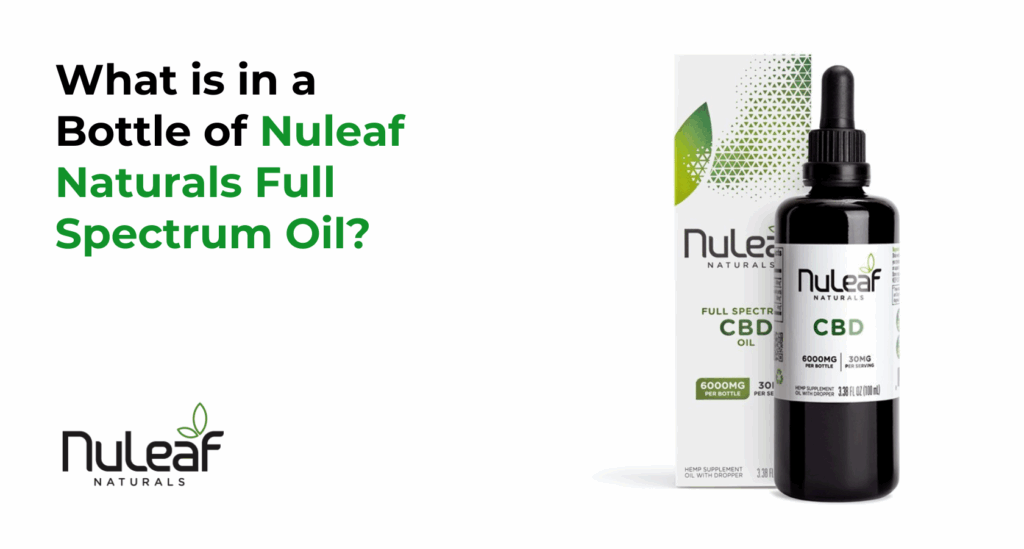
NuLeaf Naturals is committed to providing consumers with high-quality, federally compliant hemp extracts. Our products are meticulously crafted to harness the full potential of the hemp plant while strictly adhering to legal standards, making sure a non-intoxicating experience focused on wellness. When choosing a NuLeaf Naturals full spectrum oil, you select a product designed for purity, potency, and compliance.
A Full Spectrum of Plant Compounds
NuLeaf Naturals oils contain a full spectrum of potentially beneficial compounds naturally present in the hemp plant. This comprehensive profile includes a high concentration of cannabidiol (CBD), alongside a rich array of minor cannabinoids such as cannabichromene (CBC), cannabigerol (CBG), and cannabinol (CBN). Our extracts also preserve naturally occurring terpenes, flavonoids, and other essential phytonutrients.
This full spectrum approach is vital due to the “entourage effect.” The entourage effect is a synergistic interaction where these various plant compounds, when present together, work in concert to improve each other’s benefits and potentially modulate the overall effects of the extract.
This means the combined action of CBD, minor cannabinoids, and terpenes may offer a more comprehensive and balanced wellness experience compared to products containing only isolated cannabinoids.
Our advanced subcritical and supercritical CO2 extraction methods are specifically designed to obtain this complete range of compounds, making sure our oils deliver the synergistic benefits of the whole plant without harsh chemical solvents. This commitment to full-spectrum purity distinguishes our products as a truly holistic approach to cannabinoid wellness.
A Compliant, Trace Amount of THC
Improvement, NuLeaf Naturals full spectrum oils contain a trace amount of Delta-9 THC (less than 0.3%), consistent with the federal legal definition of hemp. This minute concentration of THC is insufficient to cause any intoxicating or psychoactive effects, meaning our products will not produce a “high.”
The presence of this compliant, trace amount of Delta-9 THC is intentional and scientifically significant. It plays a key role in facilitating the entourage effect, contributing to the overall synergistic activity of the cannabinoids and terpenes.
While not designed to be intoxicating, this small amount of THC, in conjunction with other compounds, interacts with the body’s endocannabinoid system (ECS) to support its natural balance.
Our rigorous cultivation and extraction processes making sure that the Delta-9 THC content consistently remains below the federally mandated 0.3% threshold, guaranteeing the legality and non-intoxicating nature of our offerings. This transparency about THC content is a cornerstone of our commitment to consumer trust and product integrity.
Wellness Applications of Hemp-Derived Oils*
Legal, full-spectrum hemp extracts from NuLeaf Naturals are formulated to support the body’s endocannabinoid system for overall well-being. These oils can:
- Support muscle recovery after exercise*
- Support rest and regular sleep*
- Promote calm*
- Support a positive mood*
- Help with the management of day-to-day stresses*
- Support healthy sleep cycles*
These are structure/function claims and are not intended to diagnose, treat, cure, or prevent any disease. Individual results may vary.
Frequently Asked Questions (FAQ) about CBD Oil vs. “Weed Oil”
Consumers frequently have questions when navigating the complex world of cannabis-derived products. Here, we address some of the most common inquiries regarding the distinction between CBD oil and what is often informally referred to as “weed oil,” providing clear, factual answers to help you make informed choices.
Is CBD Oil the same as “weed oil”?
No, CBD oil is not the same as “weed oil.” While both originate from the Cannabis sativa plant, the critical difference lies in their Delta-9 THC content and legal status. Legal CBD oil comes from hemp (less than 0.3% Delta-9 THC) and is non-intoxicating, whereas “weed oil” comes from marijuana (more than 0.3% Delta-9 THC) and is intoxicating.
What is the legal limit for THC in CBD products?
In the United States, the legal limit for Delta-9 THC in hemp-derived CBD products is 0.3% by dry weight. Products containing 0.3% Delta-9 THC or less are considered federally legal hemp, a threshold established by the 2018 Farm Bill.
Will NuLeaf Naturals products make me feel “high”?
No, NuLeaf Naturals products will not make you feel “high.” Our products are derived from federally legal hemp and contain less than 0.3% Delta-9 THC by dry weight. This trace amount of THC is insufficient to produce intoxicating effects. Our oils are designed to support general wellness without psychoactive outcomes.
What is the “entourage effect”?
The “entourage effect” is a scientific theory proposing that the various compounds in the cannabis plant—including cannabinoids (like CBD and trace THC), terpenes, and flavonoids—work synergistically. When consumed together in a full-spectrum extract, these compounds may improve each other’s potential beneficial properties and potentially modulate the overall effects, leading to a more comprehensive wellness experience than isolated compounds.
Can I fail a drug test from using hemp-derived CBD oil?
Federally legal hemp-derived CBD products contain less than 0.3% Delta-9 THC. Due to the presence of trace amounts of THC, it is possible that THC metabolites could be detected in a drug test. If you are subject to drug testing, we recommend consulting with your employer or a healthcare professional.
Are NuLeaf Naturals products third-party lab tested?
Yes, NuLeaf Naturals is committed to transparency and quality. Our products undergo rigorous third-party lab testing to confirm cannabinoid potency and make sure they are free from pesticides, herbicides, molds, fungi, heavy metals, and mycotoxins. These lab reports are often accessible to consumers to verify product quality and compliance.
Where can I find compliant hemp-derived oils?
You can find compliant hemp-derived oils, such as our NuLeaf Naturals products, through reputable retailers and online platforms that prioritize transparency and provide third-party lab results. NuLeaf Naturals makes sure all our products adhere to federal regulations, containing less than 0.3% Delta-9 THC, and are accompanied by third-party lab test results for transparency.
Conclusion
The distinction between legal hemp-derived CBD oil and “weed oil” (marijuana oil) is clear and critically important for consumers. Understanding the source plant—hemp versus marijuana—and the defining legal threshold of 0.3% Delta-9 THC is fundamental. NuLeaf Naturals stands as a trusted provider of premium, full-spectrum hemp extracts that are non-intoxicating and compliant with federal law.
Our commitment to transparency, rigorous third-party testing, and leveraging the natural synergy of the hemp plant make sure that you receive a high-quality product for your wellness journey. By choosing NuLeaf Naturals, you are opting for a safe, legal, and effective path to supporting your body’s natural balance, free from the psychoactive effects associated with marijuana.
Disclaimer: These statements have not been evaluated by the Food and Drug Administration. These products are not intended to diagnose, treat, cure, or prevent any disease.